HERBS FOR PAIN AND TISSUE REPAIR
Solomon’s seal. This is, hands down, my favourite
herb for musculoskeletal injuries. I put my 2 month LCL recovery down to
this herb alone (well that and hydrotherapy and the other stuff I list
here). It is the best thing I’ve ever used for ligament and tendon
issues, will help heal torn muscles and repair broken bones. For bad
injuries, I’ll use a tincture internally and a
salve
(with goldenrod and cottonwood and alder too) externally. Remember that
guy I told you about with the separated AC joint? Well although he
wasn’t fully healed without surgery, using solomon’s seal restored some
sort of function to his left arm, and he carried on training up until
the day before his surgery.
Goldenrod. For those aches that keep you up at
night, goldenrod infused oil is downright amazing, topically. There were
some nights when my torn LCL would ache so badly I was writhing, and
goldenrod reduced the pain enough to let me sleep. It also helps repair
torn muscles.
Teasel. For torn muscles. I’ve used a salve with
teasel, goldenrod and cottonwood for a really badly torn gastrocnemius
and other minor tears with great success.
St. John’s wort. St. John’s wort is seriously
brilliant for agonizing nerve pain. It also helps repair damaged tissues
with a quickness. I use it both externally (oil) and internally
(tincture).
Comfrey leaf. For breaks and tears
–there’s a reason it’s called ‘knit bone’. I do tincture internally and salve externally*.
Cottonwood. Oil or liniment. Topically, for pain. Amazing.
Tobacco leaf. Oil. To be honest, using tobacco
topically makes me feel nauseous, but plenty of other people seem to do
fine with it, and it’s definitely numbing.
NUTRITION
The most important thing while injured is to get enough protein and
fat so that your body is adequately nourished to repair itself. Eat high
quality wild or grass-fed meats, high quality animal fats and butter
fats, with lots of vegetables. Also, bone broth- it’s delicious to sip
on, and provides lots of amino acids and collagen and building blocks
for your body to heal itself faster.
ABOUT INFLAMMATION
I’m not a fan of taking anti-inflammatories, be them herbal or pharmaceutical. Here’s why:
A certain amount of inflammation helps your body heal faster.
Inflammatory cells (macrophages) produce a large amount of insulin like
growth factor (IGF-1) which in turn repair injuries faster. I am fully
convinced that the body knows best how to handle things like injuries,
and inflammation seems to be its way of having resources sent to the
areas that need them. Instead of reducing the inflammation, you can do
things that HELP the body’s natural healing processes like the
following:
Hydrotherapy. The basic principle of hydrotherapy is
simple: Blast the area for 2 minutes with water as hot as you can
handle, and then a 30-second blast with freezing cold water. Do this as
many times a day as you can. It stimulates circulation to the area,
speeding healing and reducing pain. You wouldn’t think that a simple bit
of water would help, but I’ve seen it work over and over again, and
really shortens recovery time.
Movement. When injured, after the initial
inflammation has gone down, gentle movement can really help. I’m not
talking about flinging oneself back into full practice-mode (or full
workout mode), but adjusting ones practice and really using the time to
listen to the body and move at a snail’s pace. With myself that meant
doing a yoga practice with some serious modifications (my knee couldn’t
support my weight at some angles, and any kind of lateral motion would
re-tear), paying really close attention to what I was doing and how it
was feeling. I got to the point where I could feel when inflammation was
starting, and that was when I knew to stop. You don’t want to reinjure
yourself or set yourself back, but having your body send more resources
to the area is a good thing.
Rest. Chances are, if you’re type-A like me, the
thought of sitting still makes you frustrated, especially when you’ve
got a to-do list the length of Santa’s gift list. Guess what? You won’t
heal if you don’t rest. Use this time to ask people for help. It’s
humbling and it sucks, but the majority of people will be glad to. Use
this time to watch movies and write lists and plan for how you’re going
to LAUNCH into action when you’re back on your feet. But for now, take
it easy dude.
Collagen, the major component of these connective tissues, begins to
degenerate and stiffen as we age. Additionally, tendons and ligaments
have a poor blood supply, making existing injuries harder to heal,
leading to decreased strength in those tissues and chronic pain.[i]
Because the integrity of these connective tissues decline with age,
leading to weakened tendons and ligaments and potentially an injury
and/or chronic pain, it is important to support them with good nutrition
and a few choice supplements.
Collagen. Collagen is the main structural
protein that makes up all human connective tissue, including tendons and
ligaments, and helps keep these tissues strong. As we age, collagen
production slows and existing collagen can deteriorate, causing tendons
and ligaments to weaken. A diet high in quality protein will provide the
building blocks the body requires to make collagen, including the amino
acids proline and lysine.[ii] Additionally, collagen supplements have
been shown to stimulate collagen production, helping to maintain healthy
tendons and ligaments.[iii]
Vitamin C. Vitamin C is required to convert
the amino acids proline and lysine into collagen[iv]; in fact, vitamin C
plays such an essential role in collagen production that a deficiency
can weaken the tendons and ligaments.[v] The vitamin also reduces
inflammation due to injury or overuse. In a human cell model of
tendonitis, a proprietary combination of collagen and vitamin C
suppressed a number of pro-inflammatory compounds and promoted
healing.[vi]
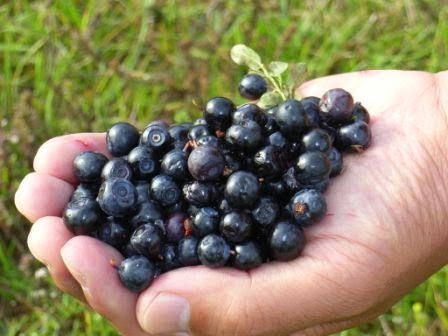
Anthocyanidins. The anthocyanidins found in dark-colored fruits such as cherries and blueberries, and in grape seed extract and Pycnogenol
®
supplements, have been shown to help the collagen fibers link together
in a way that strengthens the connective tissue matrix.[vii]
Hyaluronic Acid. Hyaluronic acid is a
component of tendons and ligaments and has been shown to stimulate
collagen production.[viii] It is also comprises the synovial fluid that
surrounds certain tendons, helping to keep them lubricated and moving
smoothly.[ix] Researchers recently discovered that a thin layer of
“skin” made of epithelial cells covers the tendons;[x] because
hyaluronic acid is a major component of connective and epithelial
tissues, it is thought to help maintain the integrity of this tendon
“skin.” An animal model of tendon injury found that hyaluronic acid
significantly speeded healing.[xi]
Gelatin. Gelatin-rich foods have long been a
part of traditional diets—cultures around the world commonly consume
all parts of animals, including the gelatin-rich cartilage and bones.
Consuming gelatin has been shown to increase collagen proteins in the
blood,[xii] helping to build the structure of both tendons and
ligaments. One easy way to introduce more gelatin into your diet is to
regularly make and consume bone broth, a savory broth made by simmering
bones in water. (Ever made homemade chicken broth from a chicken
carcass? That’s one type of bone broth.) Or consider taking a gelatin
supplement.
Although caring for your tendons and ligaments may not occur to you
until you are already suffering from pain or an injury, maintaining the
health of these important connective tissues may just save you from an
injury in the first place. A healthy natural foods diet along with a few
choice supplements will help nourish these connective tissues, keeping
them healthy and strong, and keep you moving smoothly through life.
Tendons, Ligaments, Sprains, Strains (Testimonies)
I have seen so many cases of stretched, loose, or tight
tendons cured by Solomon's Seal that I can hardly count them, probably
over a hundred. I remember one man in his forties who had been a
cornerback on a famous college football team. He had all sorts of
problems from
old injuries, such as sprains, strains, broken bones, a separated shoulder, etc. Solomon's Seal made him feel almost completely free of pain and flexible in a short time.
A woman in one of my classes had an adult son who was suffering from a
stretched ligament in the ankle.
The doctors estimated that it was over an inch too long and recommended
surgery to cut out the elongated part and sew the ends back together.
The man decided against that option, though the condition was painful
and debilitating. I recommended Solomon's Seal and Horsetail, but he
ended up taking Solomon's Seal and homeopathic Calcium carbonate, which
was also a good idea. The stretched ligament was back to its normal size
in one week. No surgery was needed.
Mathew Wood, herbalist and author
Book of Herbal Wisdom, p. 399
I have been giving selected patients Cortesia Solomon's Seal
Tincture for the past 3 months. Reports range from a complete
elimination of chronic headaches, to increased joint stability. Since,
heretofore, the only truly effective method of increasing ligamentous
stability has been treatment by prolotherapy, this remedy is a
Godsend. Believe it or not (I can hardly believe it myself) patients
with terribly misaligned feet, ankles and knees are actually
straightening out over the course of several weeks.
I would highly recommend this remedy to anyone who suffers
from chronic neck pain, headaches, or instability anywhere in their
skeletal structure.
Sincerely, Rich Phaigh LMT
Eugene, OR
I have suffered for many years with
stretched out tendons and ligaments in my badly pronated ankles - a result of flat feet. An orthopedic physician determined costly surgery was necessary, with no certainty for full success.
After one week using Somomon's Seal tincture, my ankles were
no longer pronated. My physical therapist/masseuse was amazed. He has
worked on me monthly since a car accident ten years ago. He took one
look at my ankles and affirmed that now I would no longer need the
surgery I had been trying to avoid for years. Two weeks later, as I
continued to take three daily doses of ten drops each, my lifelong
problem with
knock knees
was resolved. My knees are now straight, allowing me to hike and
mountain-climb as I did avidly in my younger years. Next, a thirty year
shoulder injury
was healed, allowing me to sleep on my side again with little or no
discomfort. I no longer experience serious neck problems as I have for
so long, and require minor adjustments only a few times per year.
Tricia Clark-McDowell
When I would get up in the morning my legs would just lock up -
the tendons would tighten up on me. But your Cortesia Solomon's Seal
Tincture works really well for Charlie horses, and I don't have that
problem now. (I haven't been taking anything else, like vitamins or
such.)
Solomon's Seal tincture helps my wife, too,
with her bones, joints and arthritis. She takes the arthritis formula
(Cortesia Solomon's Seal Tincture - Formula #1: Arthritis & Joint
Repair). So, I'm a believer. Now we want to try it for our son-in-law's
carpal tunnel.
James Polk
Abilene, Texas
I started using Cortesia's Solomons Seal tincture and salve
in 2008 when I broke my ankle. The break was not very serious, but the
collateral damage to muscles and tendons was fairly severe, so I started
using both remedies once I was out of the air cast.
I used the tincture for several months (combined with
physical therapy); now I keep a jar of the salve on hand and use it when
I have tendon pain. I think it's great!
Sources:
http://www.cauldronsandcrockpots.com/2011/10/herbs-for-athletes-part-2/
http://www.naturalgrocers.com/nutrition/body-mechanics-nourish-your-tendons-and-ligaments-keep-your-body-move
http://www.solomonsseal.net/testimonials.html




 nce
completed, put a few shells into a coffee grinder and run until they
are pulverized into a granular form. Continue until all of your shells
are powder.


